PCCRINDIA

Pragjyotish

Centre for Cultural Research (PCCR)

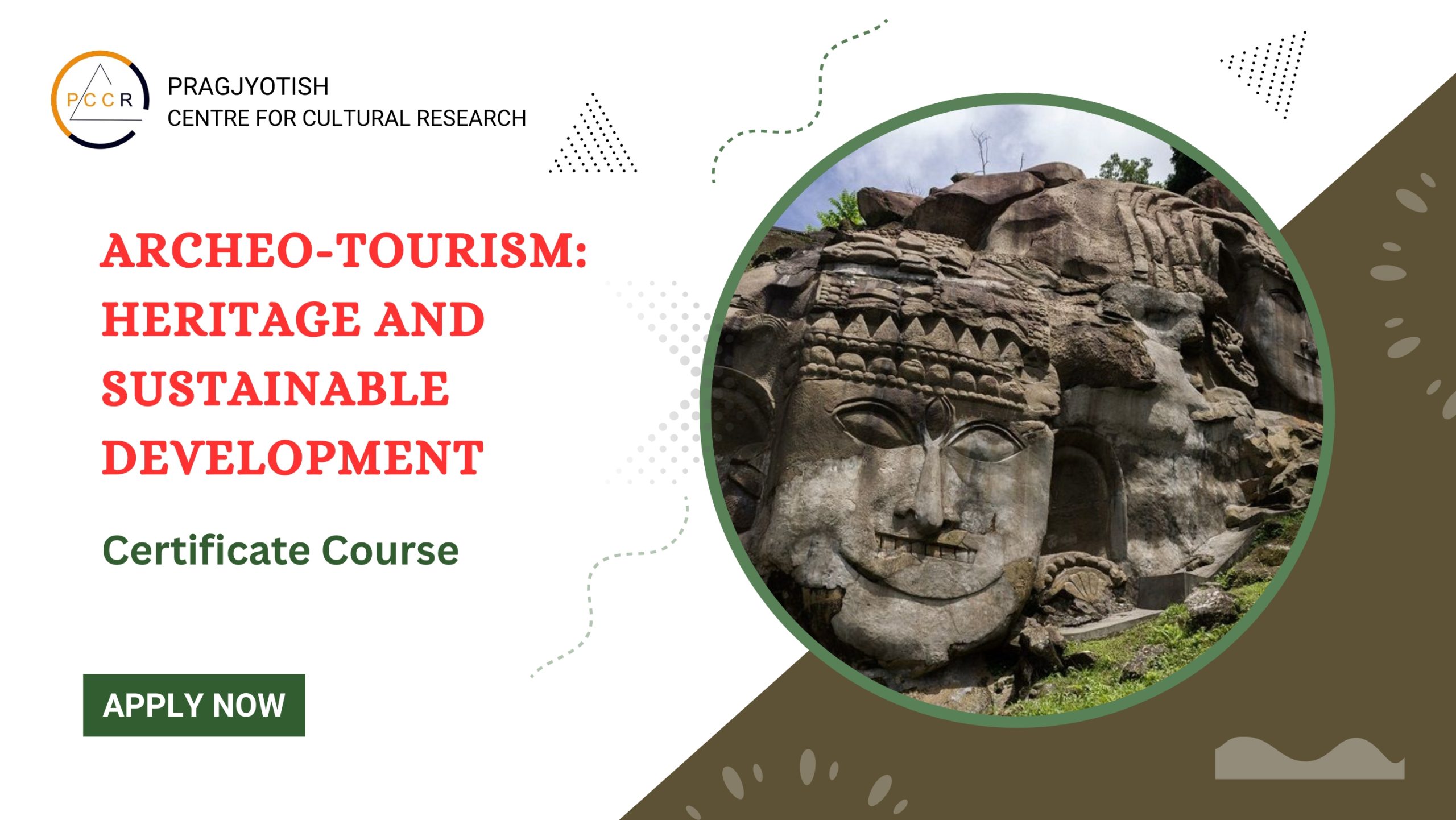
Archeo-Tourism: Heritage and Sustainable Development

ELIGIBILITY LEVEL: 12th+
  • Course Duration:

    3 Months

  • Course Mode: Online

    Weekly 2–3 hours (Lecture + interaction)

Course Overview

This course explores the intersection of archaeology and tourism, focusing on how archaeological sites are interpreted, presented, and managed for tourism. It addresses the challenges and opportunities in promoting archaeological heritage as a sustainable tourism product and discusses ethical, cultural, and conservation-related concerns. Case studies from India and across the world will be used.

Syllabus

Total Credit – 3 Course Duration – Three months

The course aims to provide learners with a comprehensive understanding of the foundations, scope, and interdisciplinary nature of archeo-tourism, while critically examining the role of archaeology in shaping tourism development. It seeks to cultivate an informed perspective on the socio-cultural, economic, and environmental impacts of tourism on archaeological sites and local communities, enabling students to assess both opportunities and challenges inherent in heritage-based tourism. The course further emphasizes the study of relevant policies, legal frameworks, and global best practices in site conservation and tourism management, with a view to fostering professional and ethical responsibility. Ultimately, learners will be equipped to formulate sustainable, inclusive, and culturally sensitive archeo-tourism strategies that balance heritage preservation with responsible public engagement.

Unit 1: Introduction to Archeo-Tourism
a. Definitions and key concepts
b. Historical background and evolution
c. Importance in cultural heritage and tourism studies

Unit 2: Archaeological Heritage and Its Value
a. Tangible vs. Intangible heritage
b. UNESCO World Heritage Sites and their relevance
c. Cultural significance and interpretation

Unit 3: Stakeholders in Archeo-Tourism
a. Archaeologists, local communities, tourists, government, NGOs
b. Community participation and benefits
c. Public archaeology

Unit 4: Legal and Ethical Frameworks
a. National and international conventions (UNESCO, ICOMOS, ASI regulations)
b. Cultural property and repatriation
c. Site protection laws and ethics of display

Unit 5: Heritage Site Management
a. Site conservation vs. tourism development
b. Visitor management strategies
c. Carrying capacity and environmental concerns

Unit 6: Interpretation and Presentation
a. Role of museums, signage, digital media
b. Guided tours, reenactments, storytelling
c. Educational tools and audience engagement

Unit 7: Marketing and Branding of Archaeological Sites
a. Cultural branding and destination image
b. Role of media, film, and social media
c. Themed tourism circuits (e.g., Buddhist Circuit, Indus Valley sites)

Unit 8: Sustainable Archeo-Tourism
a. Principles of sustainable tourism
b. Eco-friendly infrastructure and green certifications
c. Community-based and responsible tourism

Unit 9: Case Studies – India
a. Hampi, Sanchi, Nalanda, Dholavira, Khajuraho, Charaideo Maidam
b. Management practices and challenges
c. Role of ASI and INTACH

Unit 10: Case Studies – Global
a. Machu Picchu (Peru), Pompeii (Italy), Petra (Jordan), Angkor Wat (Cambodia)
b. Comparative analysis of strategies and outcomes

Unit 11: Technological Innovations
a. Use of GIS, AR/VR, digital reconstructions
b. Virtual tourism and remote site access
c. Challenges in digitization

Unit 12: Policy, Planning, and Development
a. Tourism policy frameworks
b. Integrating archeo-tourism into regional development
c. Public-private partnerships

Unit 13: Project Workshop
a. Group presentations: Students develop a hypothetical archeo-tourism plan for a selected site
b. Feedback and peer evaluation

Unit 14: Review and Assessment
a. Wrap-up discussions
b. Final written test/portfolio submissions
  • Class Participation & Discussion: 10%
  • Case Study Analysis (Individual): 15%
  • Site Visit Report (if possible): 15%
  • Project & Presentation: 30%
  • Timothy, D. J., & Boyd, S. W. (2003). Heritage Tourism.
  • Silberman, N. (2011). Heritage Interpretation and Public Memory.
  • Cleere, H. (Ed.). (1989). Archaeological Heritage Management in the Modern World.
  • Singh, Rana P.B. (2009). Sacred Geography of Goddesses in South Asia: Essays in Memory of David Kinsley.
  • UNESCO, ICOMOS, and ASI guidelines and charters


  • INR 5,700

Investment 
to secure your future

1 Fee sturcture
Students/Professionals: Rs. 5,700/-